
Delta OS
Delta OS:
Thirty AI agents. Nine lenses that disagree on purpose.
Six positions. The disagreement is the finding.
ABusiness quality and owner earnings
Is this a good business?
SupportsSwitching costs hold. Owner earnings steady.
Two rosters
Twenty-one agents argue it. Nine desks hold the gates.
21 agents argue
- Deal counsel
- Tax counsel
- Risk officer
- Compliance
- Regulatory
- Insurance
- Estate
- Treasury
- Philanthropy
Drag the case through the desks. 3 desks invoked by this case.
The profile
Every agent is built to the profile of the best hire an institution makes: the analyst or portfolio manager it recruits and then spends a decade developing.
Doctorate-level depth in its discipline. CFA-standard rigor on valuation and risk. The working methods of the leading investment banks, hedge funds and private equity firms, learned the way those firms teach them. The judgment of a C-level investment executive, applied with the throughput of a top-tier vice president.
Built by practitioners, not scraped. Each agent is developed and trained by industry veterans on custom data, custom tools and custom skills assembled for the function it holds. The method, the vocabulary and the standard of evidence are the ones a professional desk uses.
The report
Diligence in minutes, not a week.
The diligence
The agent does not summarize the deck. It underwrites the opportunity, and it shows its work.
Transaction-services-grade normalization: quality of earnings, add-back haircuts, normalized working capital and net debt, and the valuation cross-check a bank runs before it puts its name on a number. The financials are rebuilt, not read back from the management presentation.
This is the difference between an underwritten opinion and a model paraphrasing a deck. Generic AI output is fluent and unsourced; the report here is traceable to the method that produced it, with the evidence and the disagreement left in.
The method
Every report says what Atlas can judge, and what it could prove.
- 01StrategyThesis, with what would break it
- 02DiligenceThe financials, rebuilt
- 03ReportDisagreement left in
On every report
The gap. Named on the report. Your documents fill it.
The office
The bench a family office would staff, run as software.
A thirty-person office costs $4.5M to $9.0M a year before the first mandate. Delta OS runs the same bench as 21 agents and nine function desks, and your team keeps the decision.
Atlas
Atlas is not a screener and not a chatbot over filings. It runs a defined investment process end to end, and returns a report that shows its reasoning, its disagreements and the limits of its own evidence.
An opportunity arrives with its evidence.
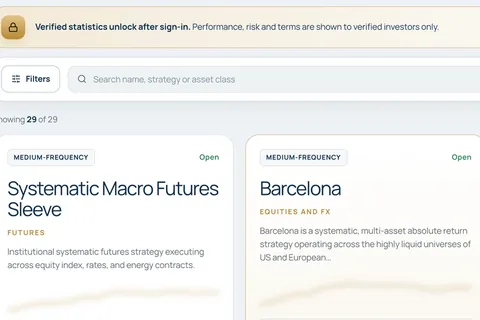
Apex Marketplace feeds the pipeline. A program arrives with its diligence record already attached, next to the opportunities your office sources itself.
Compared on the same evidence, not on the quality of a pitch.
- 13asset classes, including the ones that have always needed a specialist desk of their own: private credit, direct property, litigation finance, insurance-linked risk and structured notes.
- Everyreport names the evidence its conclusion rests on. Each class is underwritten on public filings, registries and datasets, and Atlas is explicit where the public evidence runs out.
- 1–5investment staff, or none. Atlas serves the office running an institutional portfolio at that scale.
Decision support, not advice. The client makes every investment decision: Atlas holds no discretion over client assets, constructs no portfolios and issues no imperative verdict.